


A Corrosion Pro’s Take on Helical (Screw) Pile Protection. A look at the problem of a screw pile installer Alex (Terra Ship, Serbia).
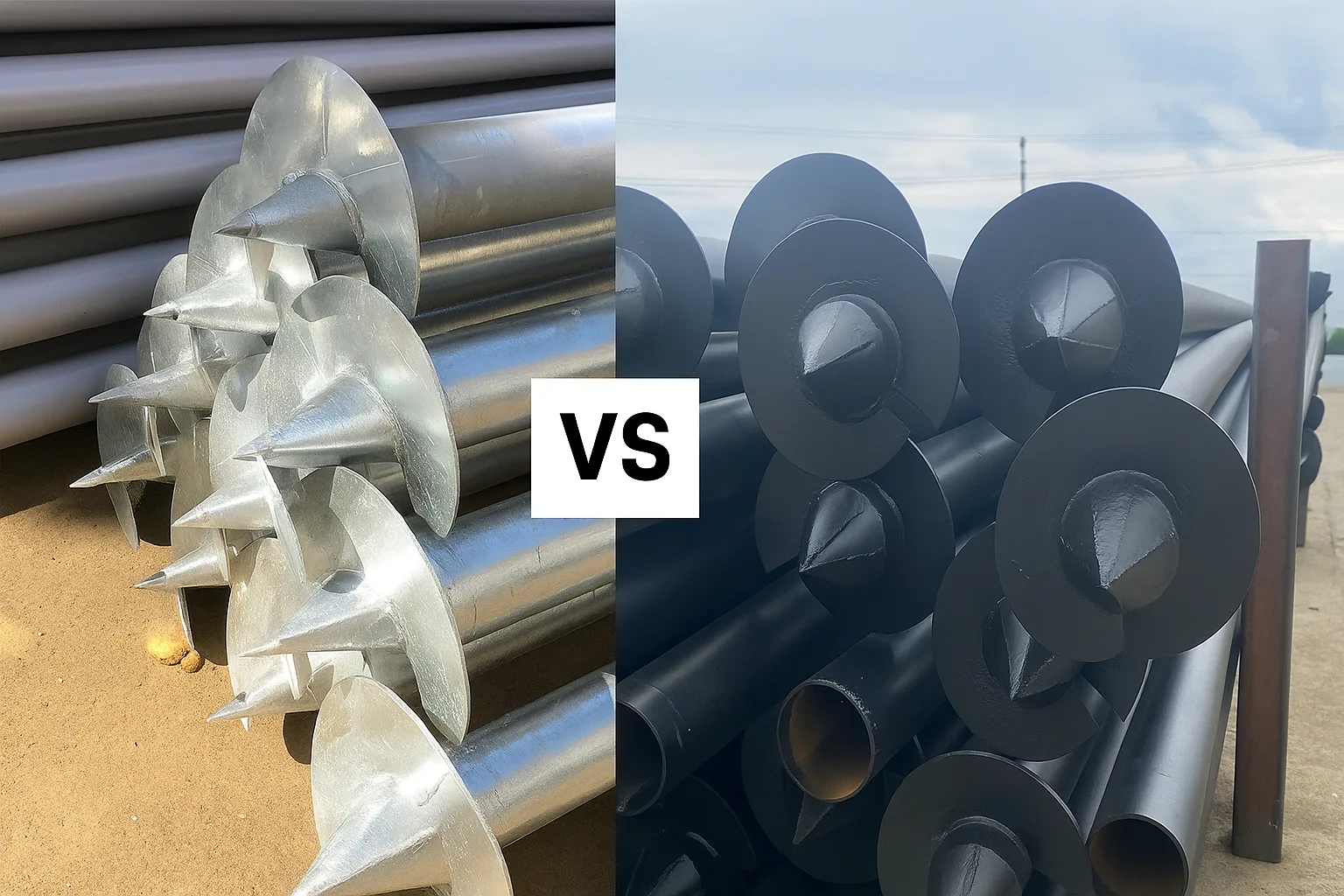
Protecting helical (screw) piles from corrosion is not just a critically important task for the longevity of any structure; it’s a battle against the elements I’ve been waging for more than 10 years. Hot-dip galvanizing and powder coating are widely used as primary protection methods, and I’ve seen firsthand the successes (and failures) of both. Choosing between these technologies isn’t just a matter of comparing specs; it requires a deep understanding of the mechanisms of steel corrosion in real-world conditions and the operating principles of each coating.
Hot-Dip Galvanizing: Sacrificial Protection and Barrier Formation – My Old Reliable
Hot-dip galvanizing (or hot-dip zinc coating) isn’t just some textbook process; it’s a method I’ve witnessed transforming steel piles into corrosion-resistant workhorses. It involves immersing helical (screw) piles in molten zinc (typically at a temperature of about 450°C). As a result, several layers of iron-zinc alloy (Fe/Zn) of varying composition and purity, as well as an outer layer of pure zinc, are formed on the helical (screw) pile’s surface. Chemically, the advantages boil down to this:
– Advantages:
- Electrochemical Protection: The Reason I Trust Zinc: Zinc is a more electronegative metal than iron. Think of it as the ultimate team player – in an electrochemical cell formed in the presence of an electrolyte (e.g., moisture with dissolved salts), zinc acts as the anode, corroding for the steel (cathode). This process is called “sacrificial protection” or “galvanic protection,” and it’s why zinc can save your bacon in harsh environments. Zinc slowly dissolves, forming oxides and carbonates, which in turn form a protective film on the surface.
- Barrier Protection: A Solid First Line of Defense: The zinc layer formed as a result of hot-dip galvanizing creates a tough physical barrier preventing contact of the helical (screw) pile with a corrosive environment (water, oxygen, chlorides, etc.). The thickness of this layer is significantly greater than that of other galvanizing methods (e.g., electroplating), providing longer-lasting protection.
- Galvanic Compatibility: They Play Well Together: The formation of iron-zinc alloys in the transition zone between the steel and the zinc coating ensures good adhesion and galvanic compatibility between the two metals. This reduces the risk of coating delamination.
- Self-Healing: Like a Superhero’s Healing Factor: Here’s where zinc really shines. In case of minor damage to the zinc coating (scratches, chips), electrochemical protection allows the zinc to “heal” these defects, preventing steel corrosion in these areas. It’s not magic, but it’s pretty close.
– Disadvantages: Every Hero Has a Weakness
- Reaction with Some Soil Types: Acidic Soil Can Be Zinc’s Kryptonite: In some types of soil, such as those rich in organic acids or having a low pH, zinc can dissolve rapidly, shortening the coating’s lifespan. I’ve seen this happen firsthand on projects in the Balcans (Serbia, Montenegro, Croatia, etc.)
- Risk of Corrosion in Seawater: A Salty Situation: Although zinc provides good protection in fresh water, in seawater with a high concentration of chlorides, zinc corrosion is accelerated. Proper design and alloy selection is KEY here.
- Impact on Steel’s Mechanical Properties: Usually Not a Deal-Breaker: The high temperature of the process slightly alters the mechanical properties of high-strength steel (generally not critical for piles).
Coating: Organic Barrier and Aesthetics – The Pretty Protector
Powder coating – isn’t just about making things look good; it’s a technology of applying a polymer powder to the surface of a helical (screw) pile, followed by polymerization at a high temperature (typically 160-220°C). The powder typically consists of a polymer resin (polyester, epoxy resin, polyurethane), pigments, fillers, and additives.
Chemically, the powder coating acts as an organic barrier, isolating the helical (screw) pile from an aggressive environment. Think of it as a stylish raincoat for your steel.
– Advantages:
- Chemical Resistance. Built to Resist: Modern powder coatings possess high resistance to various chemical substances, such as acids, alkalis, solvents, and salts.
- Mechanical Strength. Tough on the Outside: Powder coatings exhibit good adhesion to the helical (screw) pile and high resistance to scratches, chips, and abrasion.
- Aesthetic Appeal. Where Powder Coating Truly Shines: Powder coatings are available in a wide range of colors and textures, allowing for an aesthetically pleasing appearance for the piles. This is where you can REALLY customize your project.
- Environmental Friendliness. Greener Choice: Powder coating is a more environmentally friendly process compared to traditional liquid paint coating methods because it does not require the use of solvents.
– Disadvantages: Not Always the Best Choice
- Lack of Electrochemical Protection. The Achilles’ Heel: The most significant drawback is the absence of electrochemical protection. This is the big one! Unlike zinc, powder coatings do not provide electrochemical protection to the helical (screw) pile. If the coating is damaged, corrosion can spread rapidly beneath the paint layer. I’ve seen this lead to premature failure on several projects!
- Adhesion: All About Prep Work: The adhesion of the powder coating to the helical (screw) pile is a critical factor. Poor surface preparation or improper powder application can lead to coating delamination.
- Polymer Aging: Time Takes Its Toll: Under the influence of ultraviolet radiation, moisture, and temperature fluctuations, the polymer coating can degrade over time, losing its protective properties. (Especially on Southern-Facing slopes).
- Thickness: Can’t Skimp on Thickness: Adequate thickness of the powder coating is necessary to provide effective protection. A layer that is too thin may not be sufficiently resistant to mechanical damage and chemical attack.
Combined Protection: The Best of Both Worlds (and My Go-To)
The most effective solution for protecting helical (screw) piles is to use combined systems that integrate hot-dip galvanizing and powder coating (a so-called “duplex system”). In this configuration, zinc provides electrochemical protection, and the powder coating provides an additional barrier. It’s like having a belt and suspenders – you’re REALLY secure. This system delivers maximum durability and reliable protection in the most aggressive environments. I recommend this for any project with a long lifespan and potential for exposure to harsh elements. But remember! It is the most expensive kind of screw (helical) piles. To be honest, I’ve only used this type of pile on one project throughout my years of work.
The Verdict: Choosing What’s Right for Your Project
The selection between hot-dip galvanizing and powder coating for protecting helical (screw) piles should be based on a detailed analysis of the operating conditions, soil type, climate, and required service life. Considerations include:
– Hot-dip galvanizing is preferable in conditions where high corrosion resistance and electrochemical protection are required, especially with direct contact with soil or water – which represents the vast majority of applications.
– Powder coating can be a suitable choice for piles in less aggressive environments, as well as where aesthetics, cost-effectiveness, and chemical resistance to certain substances are important, and there is no high load. For example, powder coating is suitable for piles used to reinforce the foundation inside a heated building, for road fencing, for a terrace, for a gazebo, for a fence, etc.
– Combined Protection for special clients and special tasks. For example (in my case), piles for construction in coastal areas with a temperate climate (marinas, piers).